Meta · Facebook · 2021–2022
Reels Timeline Editor
Redesigned the editing foundation for Facebook Reels — turning a fragmented, feature-limited tool into a scalable stacked timeline system that shipped to millions of creators and became the standard across Meta.
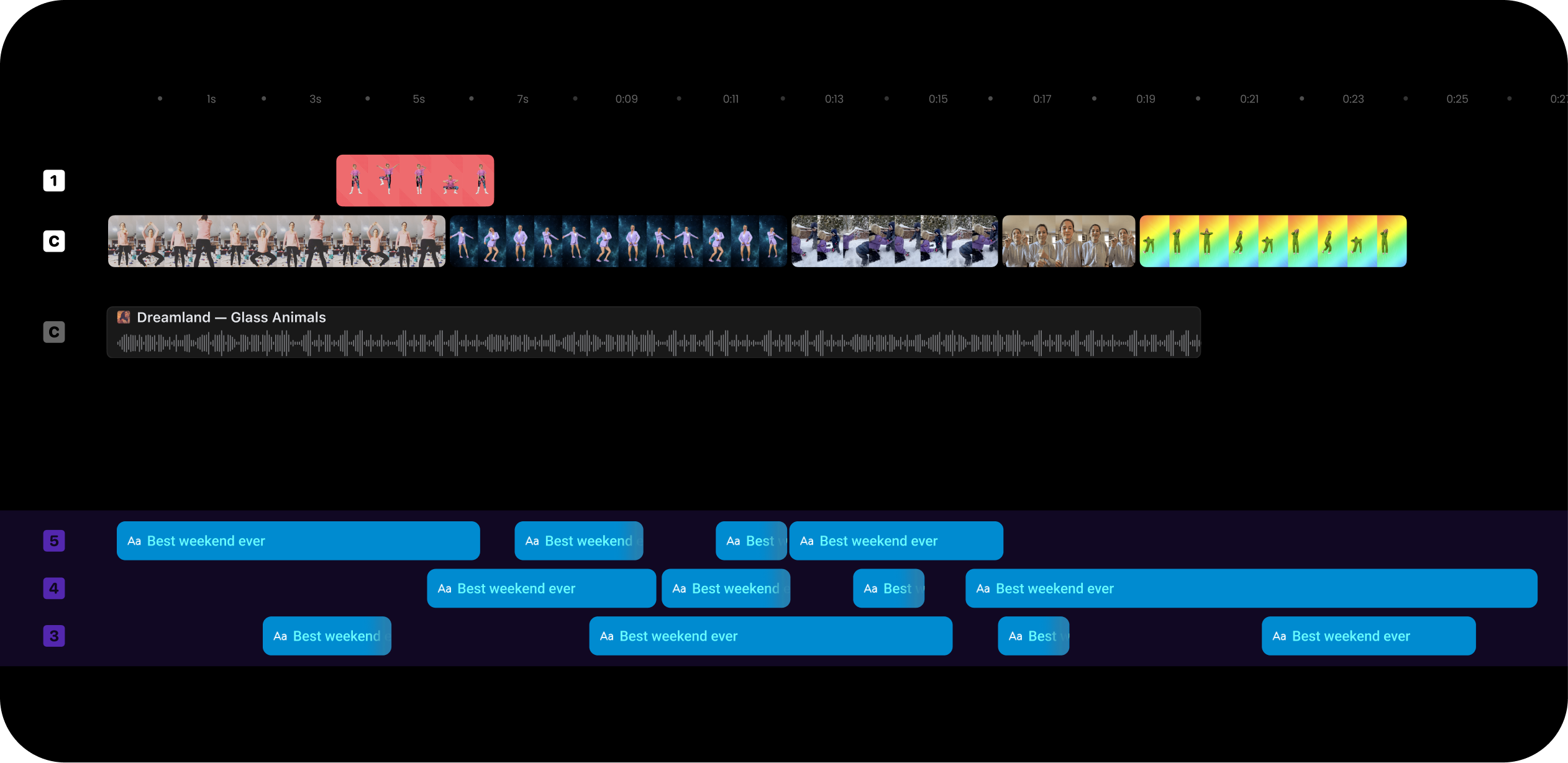
The Problem
Facebook Reels' editing tools had been quickly assembled from the Stories editor — and it showed. As creators demanded more expressive controls, the fragmented architecture couldn't support multiple simultaneous effects. Features were siloed, the system couldn't scale, and Reels was falling behind TikTok and CapCut in editing capability.
My Role
Lead product designer on a cross-functional team of 15+, spanning PM, content design, engineering, and UX research. I set the design vision and strategy, led design sprints, drove stakeholder alignment across 3 engineering teams, and directly influenced roadmap and feature prioritization.
Research & Discovery
Rather than guess at a solution, I led an extensive discovery phase: analyzing 7 competing apps, capturing 425+ screens, and categorizing 5 core feature areas. Competitive analysis of TikTok and CapCut alongside a creator audit revealed a clear gap — our users needed a unified editing environment, not a patchwork of separate flows.
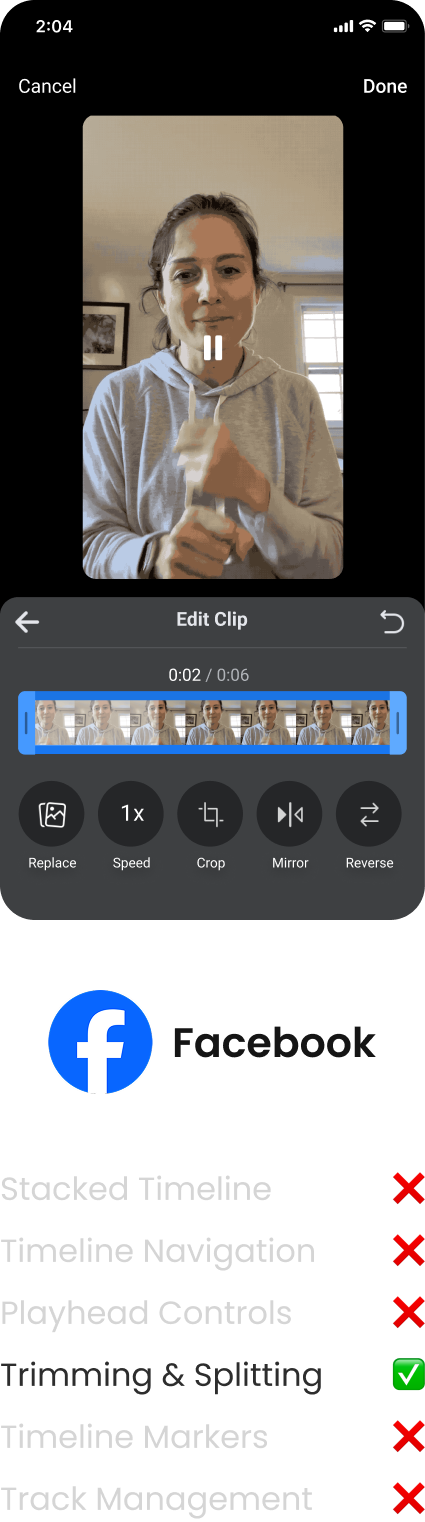
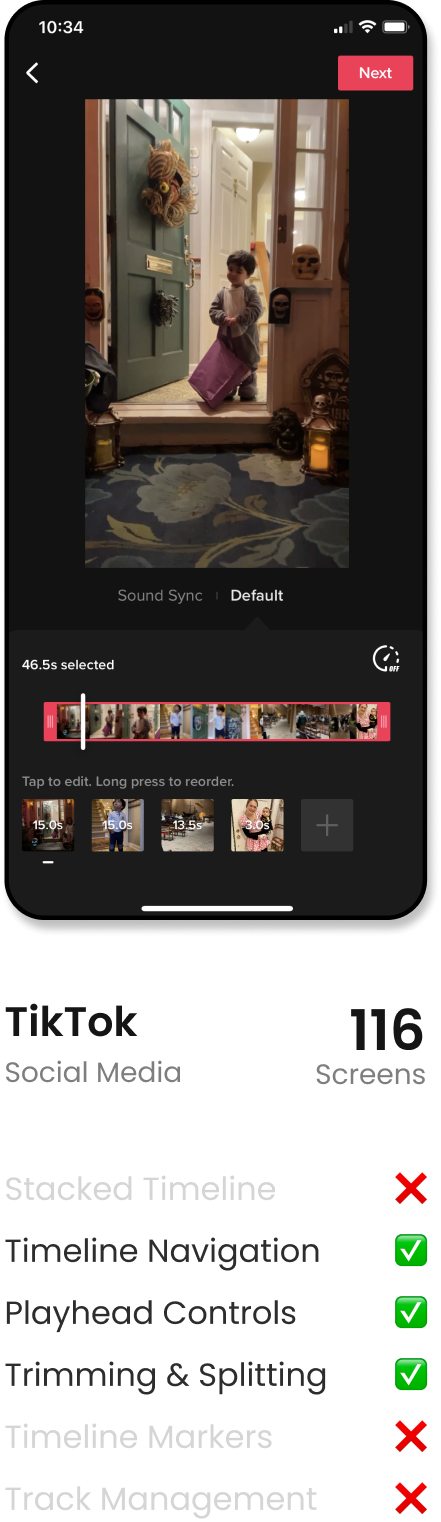
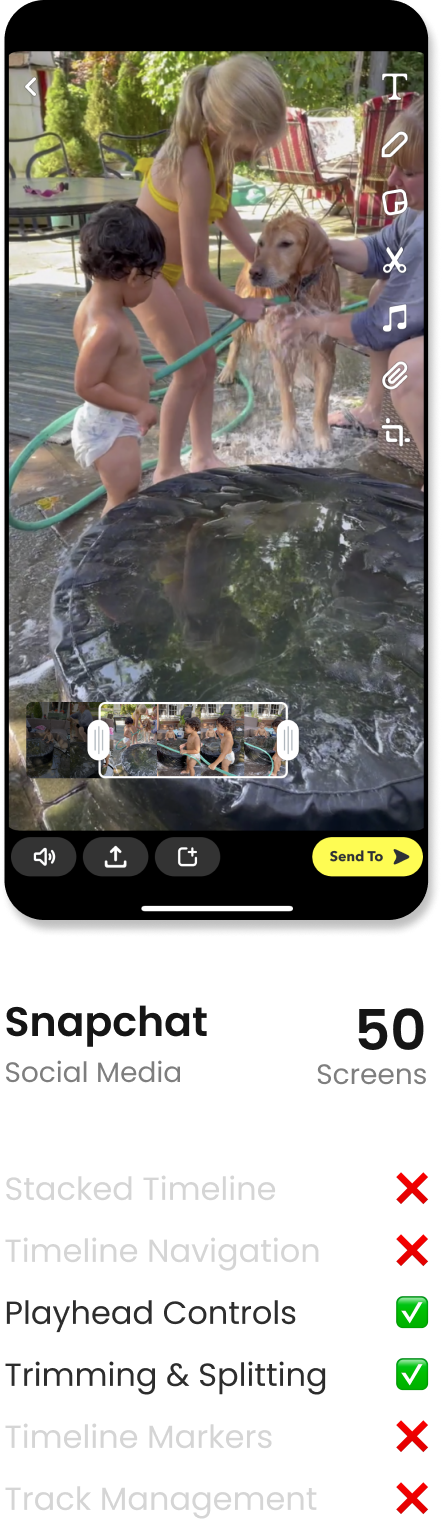
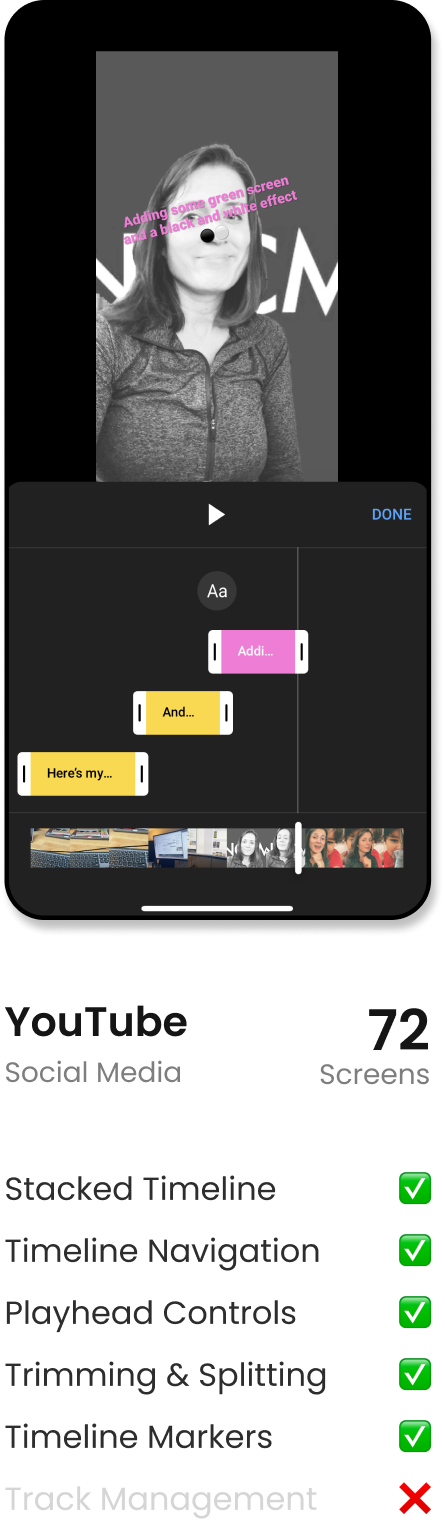
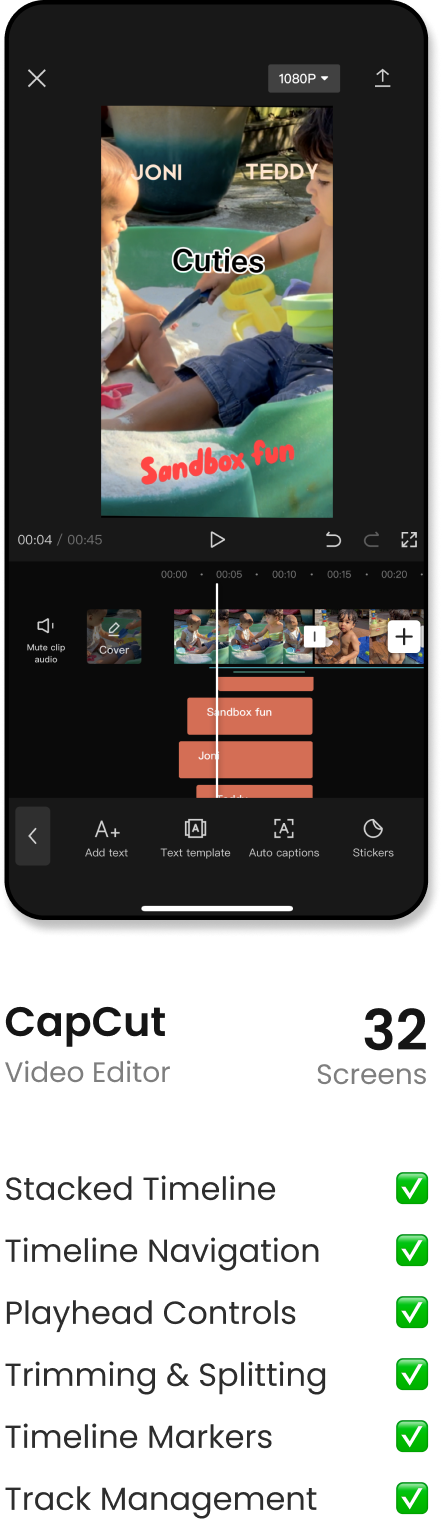
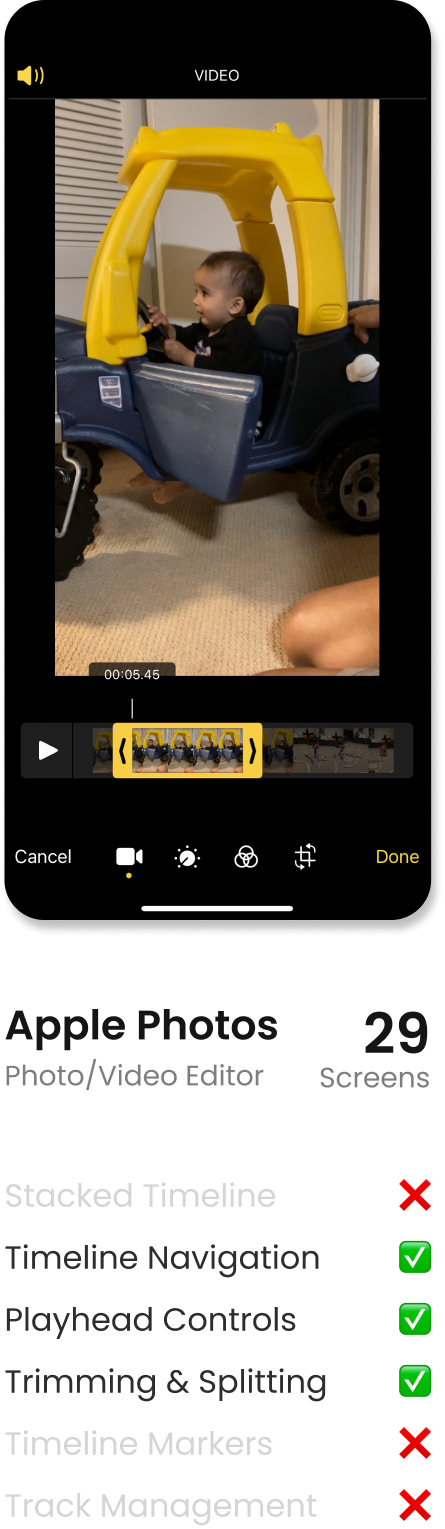
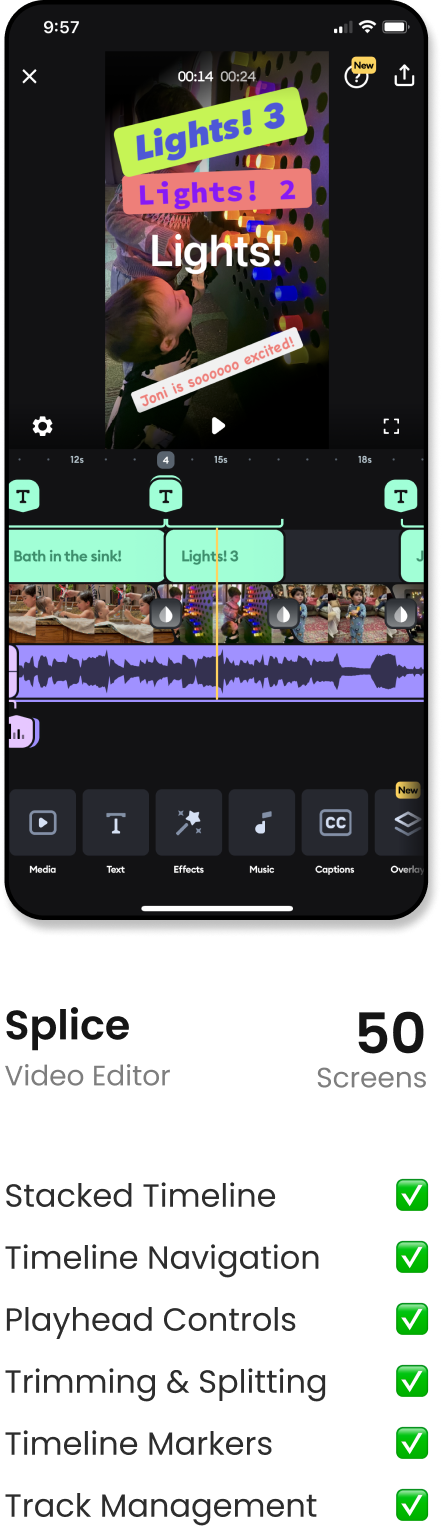
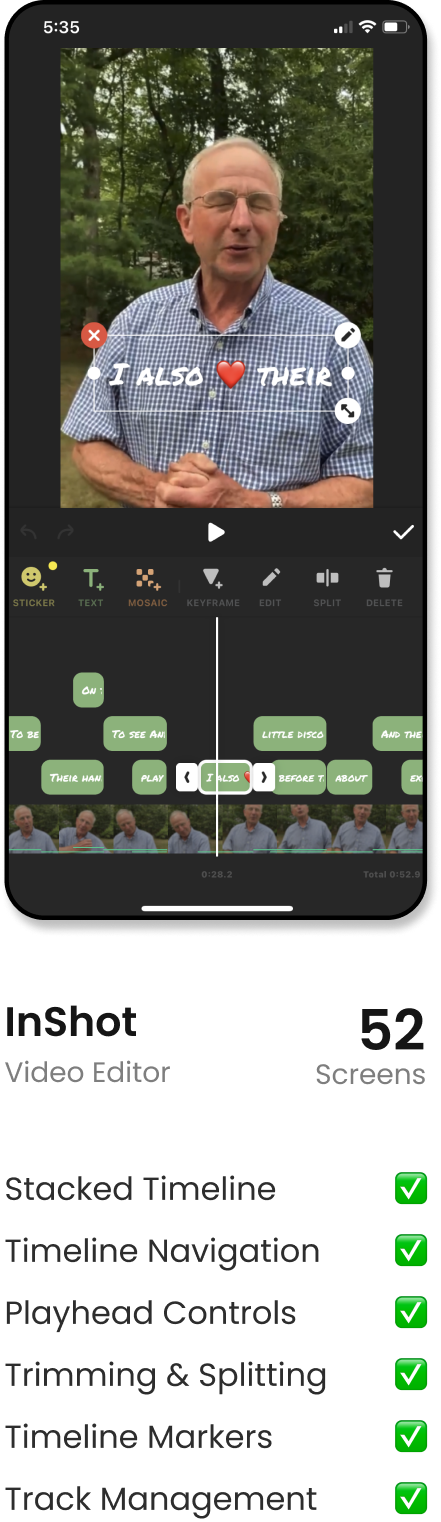
Detailed feature category breakdowns across competitor apps
User Testing
I ran 5 rounds of research testing 3 distinct approaches. 85% of creators preferred the unified stacked timeline view — validating the case for a full architectural rethink rather than incremental improvements.
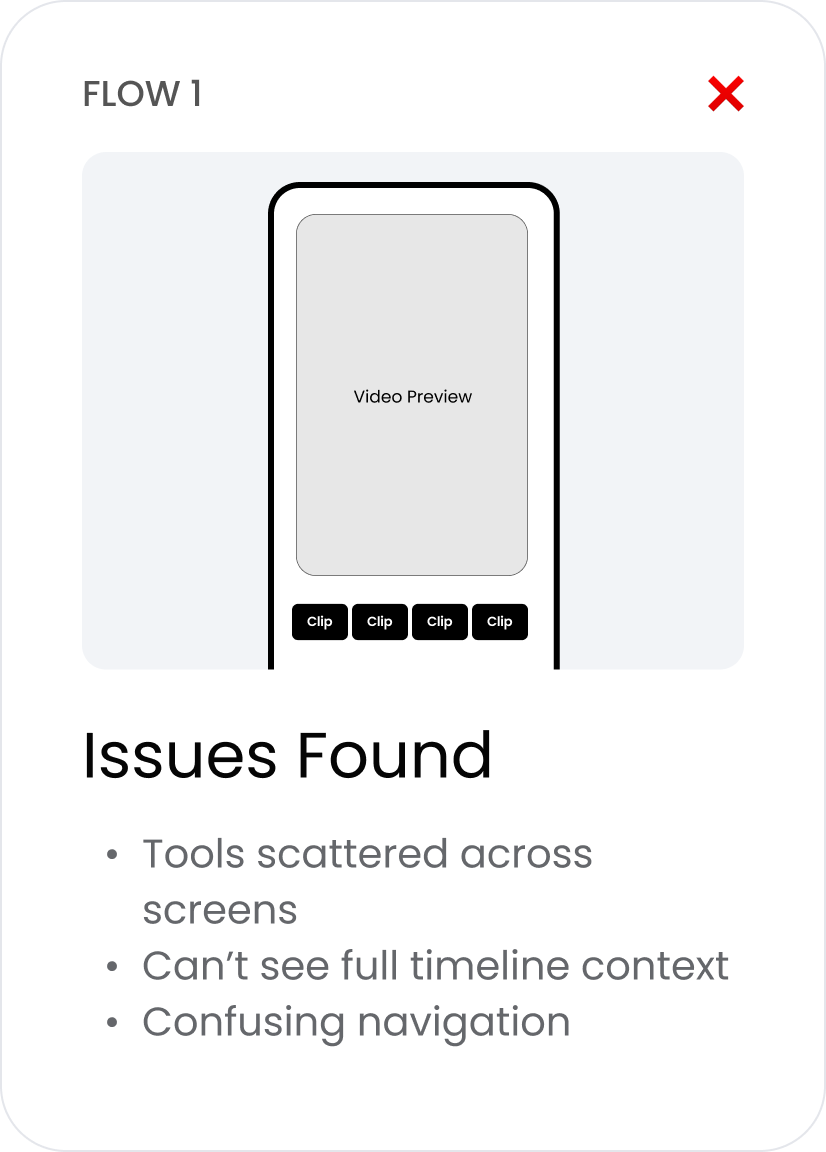
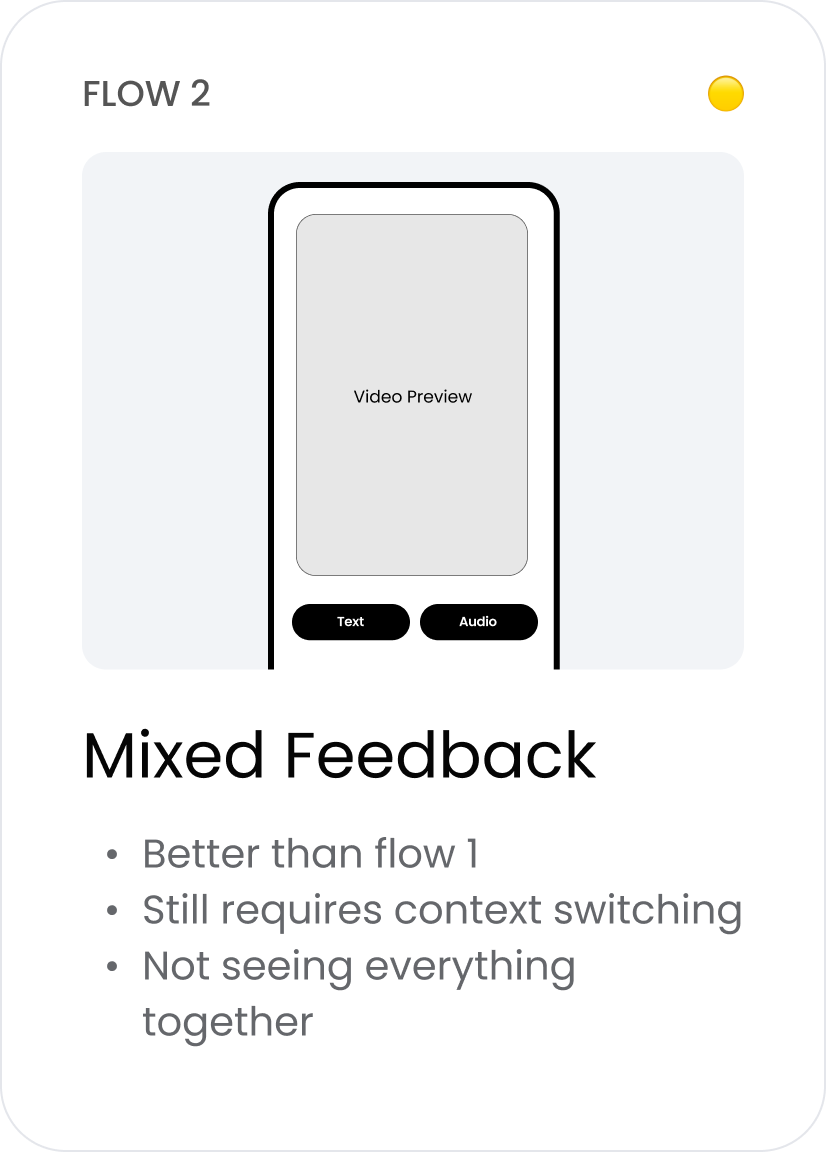
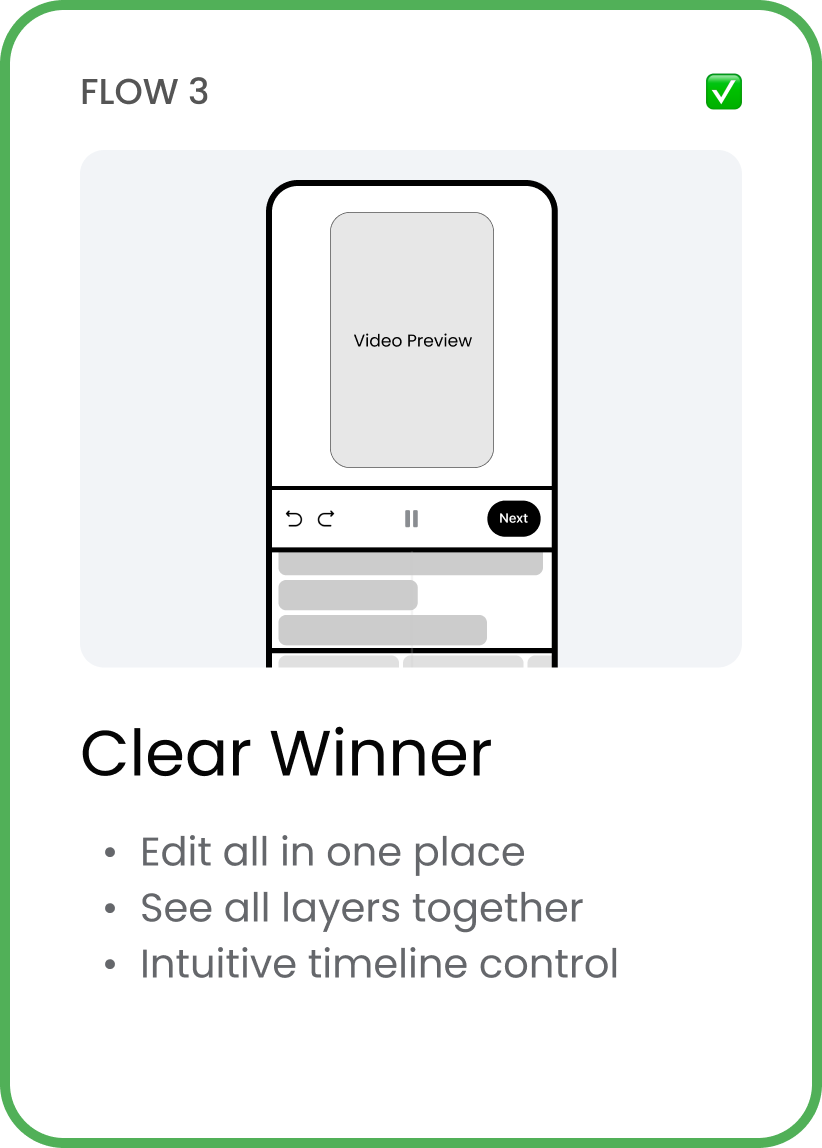
Flow 1 vs. Flow 2 vs. Flow 3 — 85% of participants preferred the unified timeline (Flow 3)
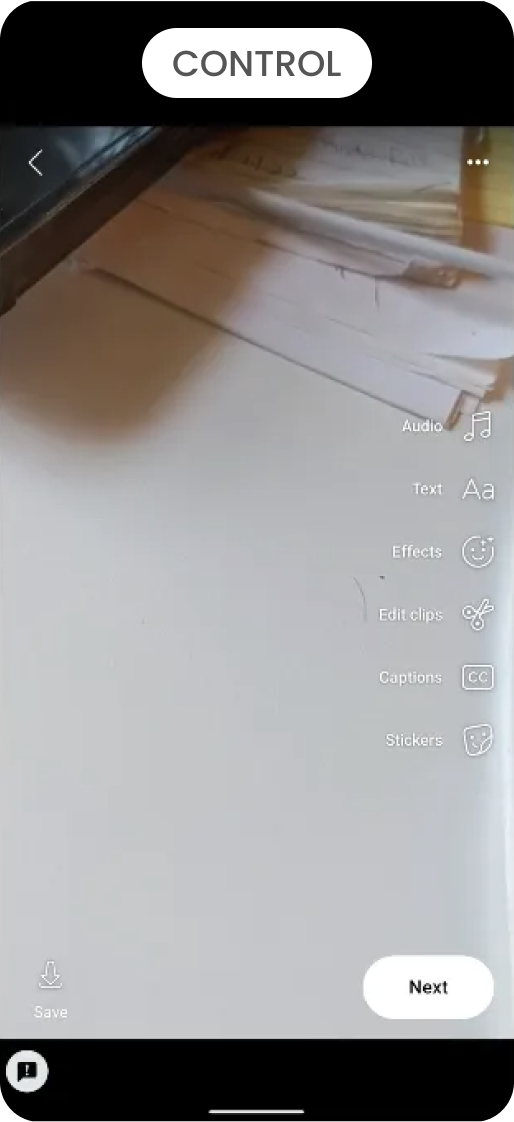
Control
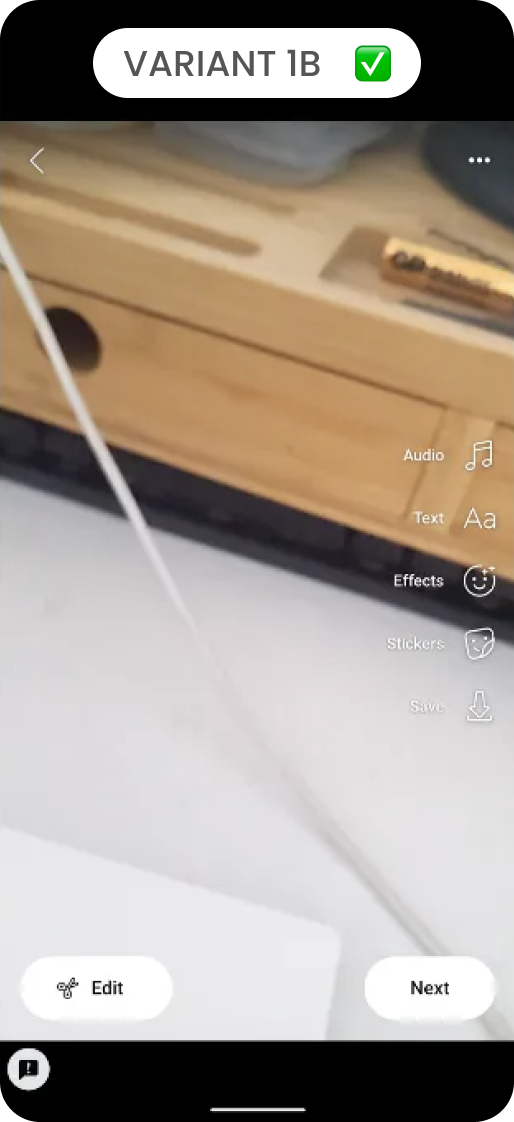
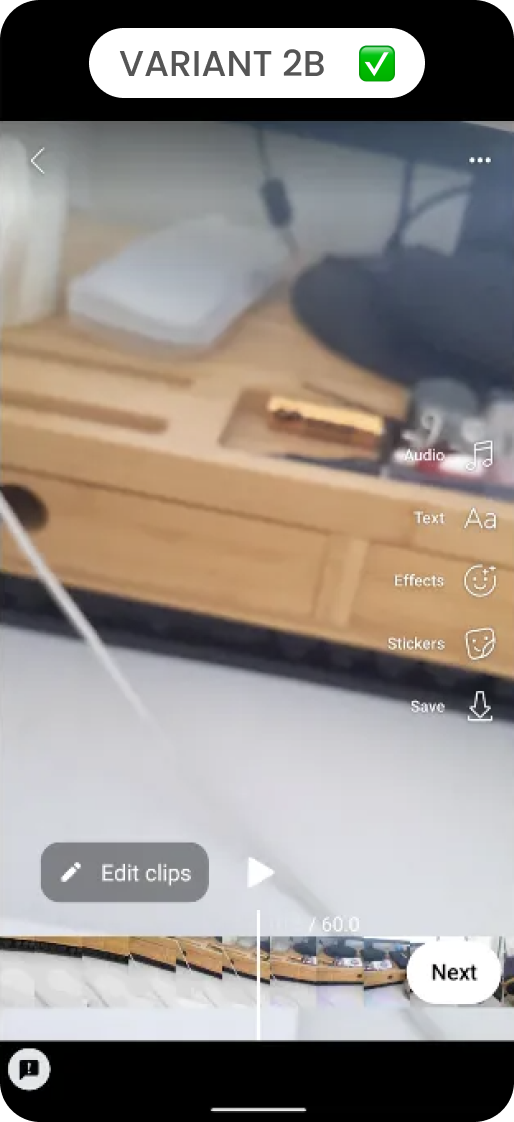
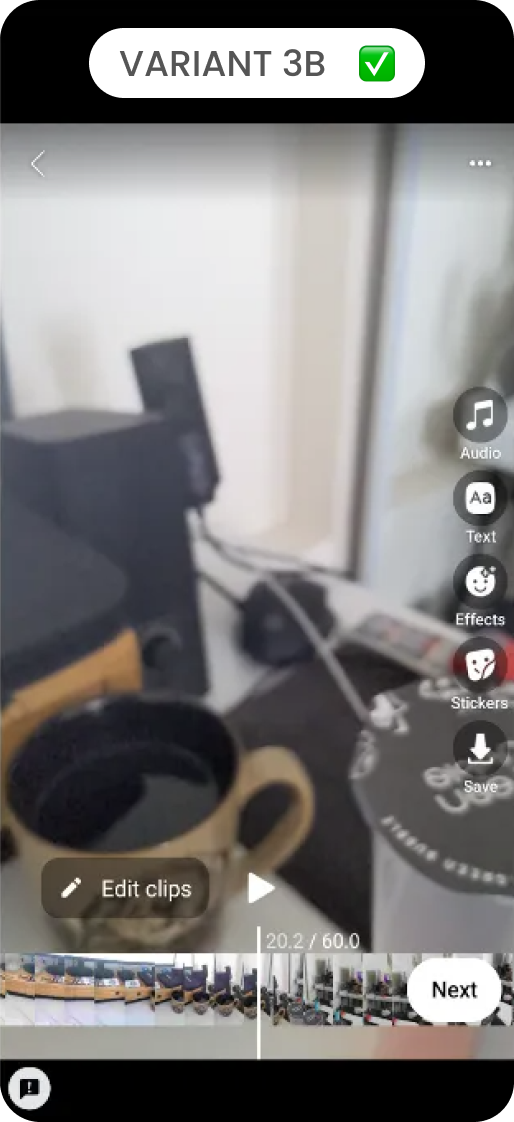
The "Next" navigation in the bottom right ended up outperforming.
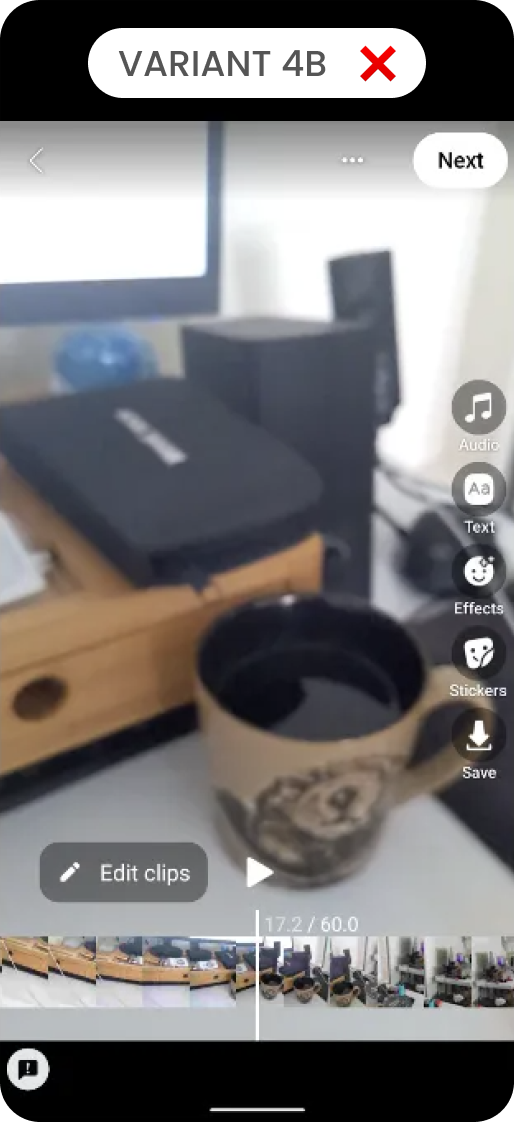
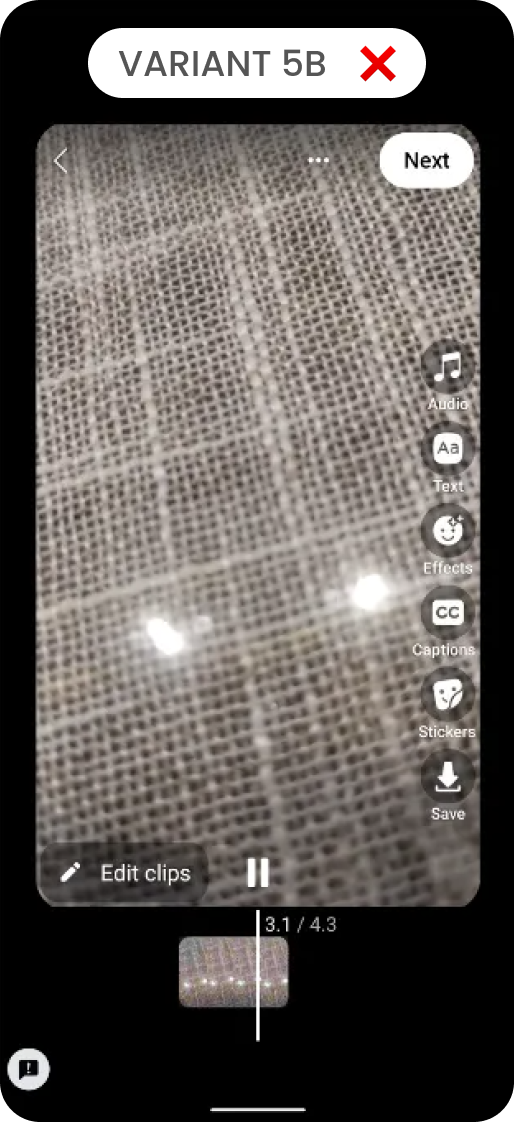
Based on my audits and design intuition, I was hoping to see that the upper right "Next" navigation button would be the winner.
The Solution
I convinced leadership to invest in a unified stacked timeline — a new editing foundation built to scale. Designed and shipped in 5 phases over 14 months, the system progressed from updating the preview scrubber to supporting fully layered audio, text, visual effects, and stickers.
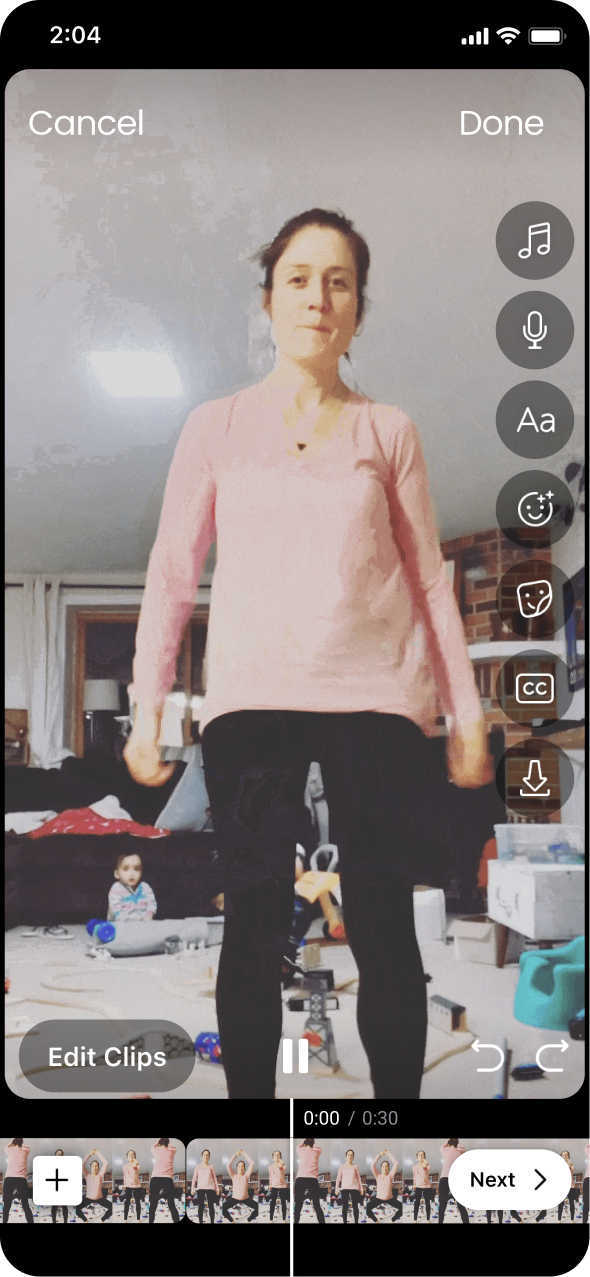
Phase 1: Updating the preview scrubber
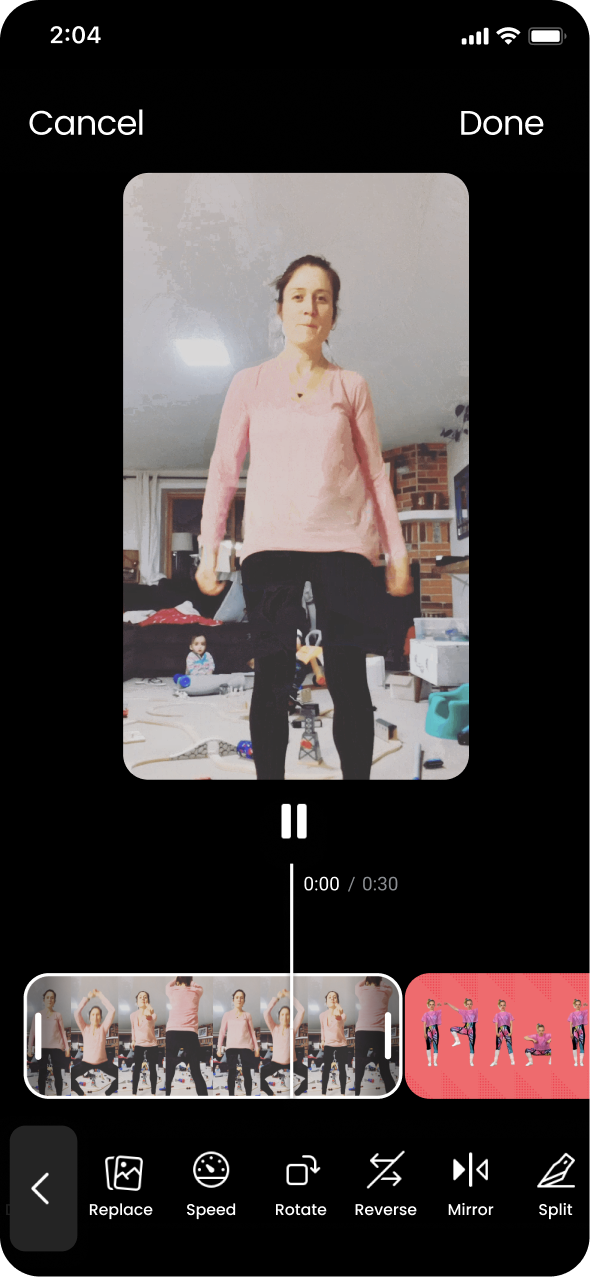
Phase 2: Framework for CLE (clip level editing) Tools
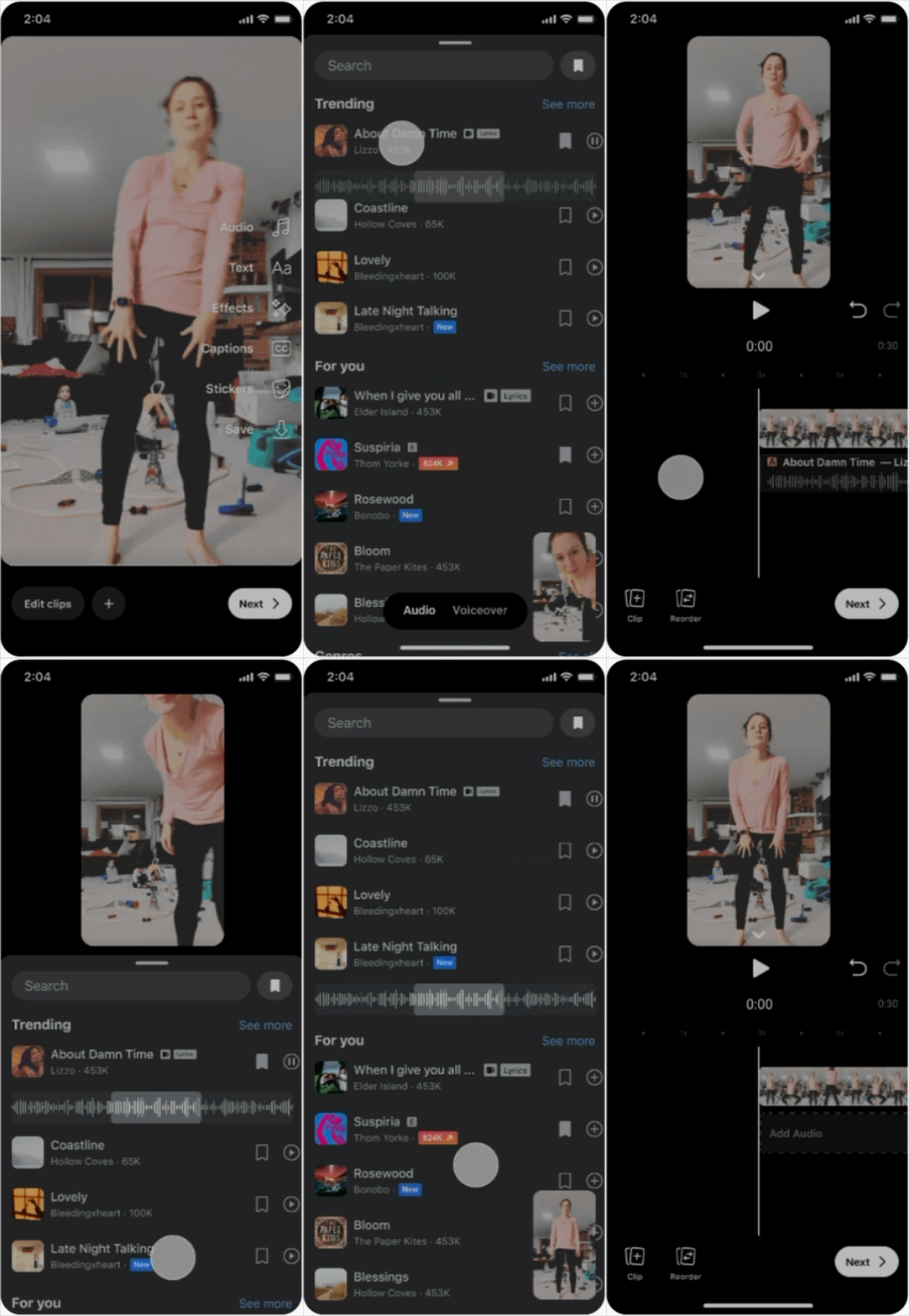
Phase 3: Adding Audio in Stacked Timeline
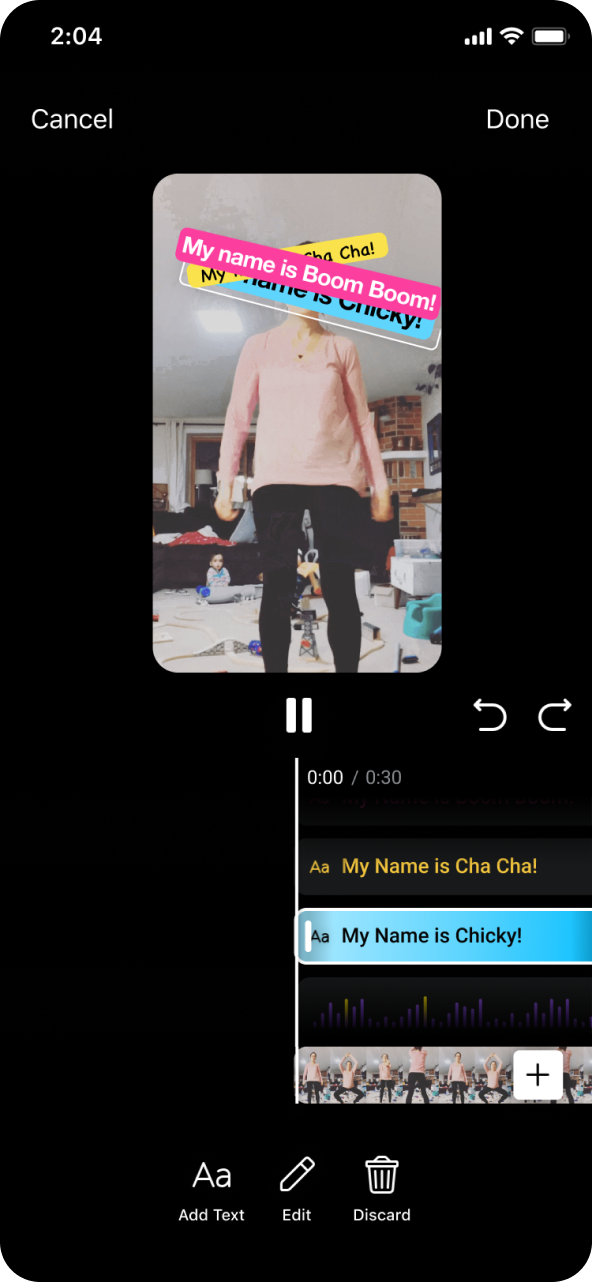
Phase 4: Adding Text in Stacked Timeline
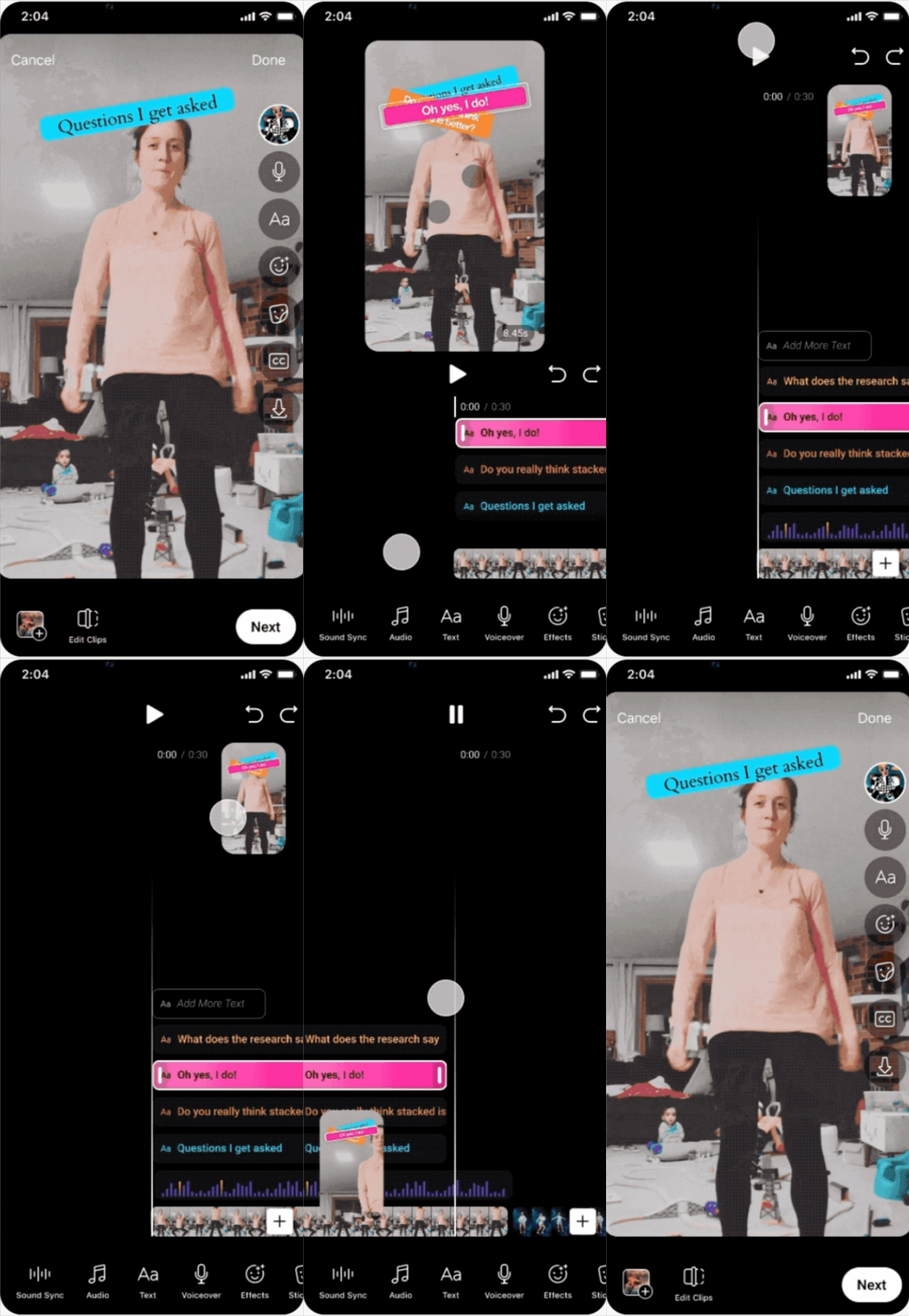
Phase 5: Adding delight & refinement — not shipped
I partnered with the Instagram team to ensure cross-platform consistency, and built a comprehensive sticker sheet aligned to Meta's internal design standards. Every design decision was anchored to five principles: simple navigation, consistency, standardized onboarding, clear mental models, and ease of use.
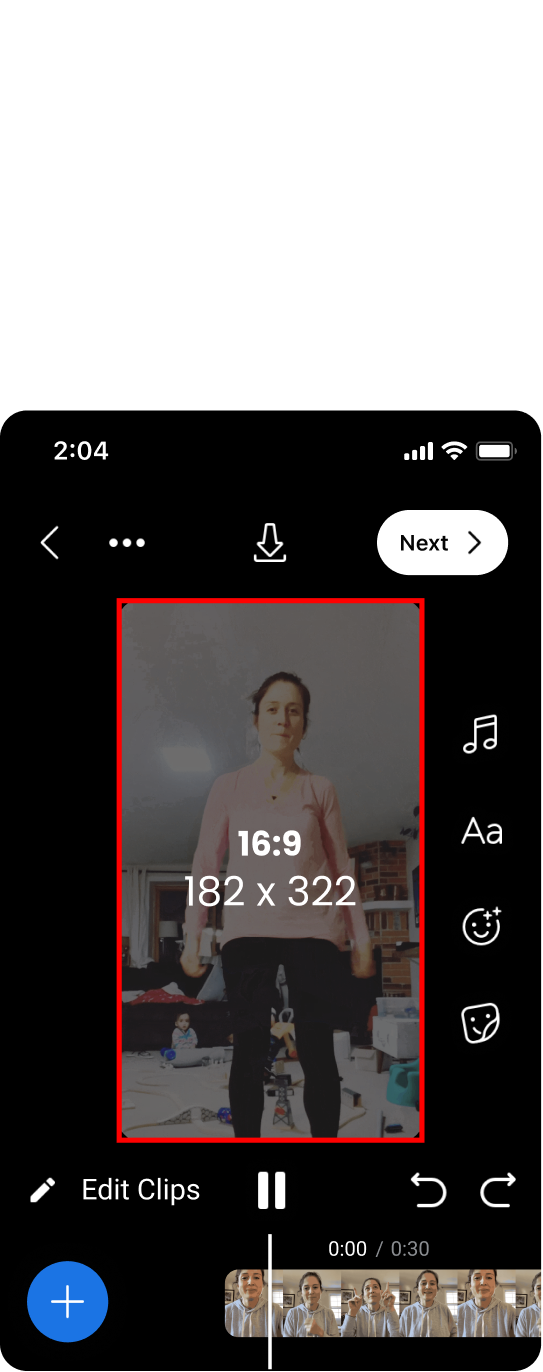
iPhone SE: 568.88 x 320
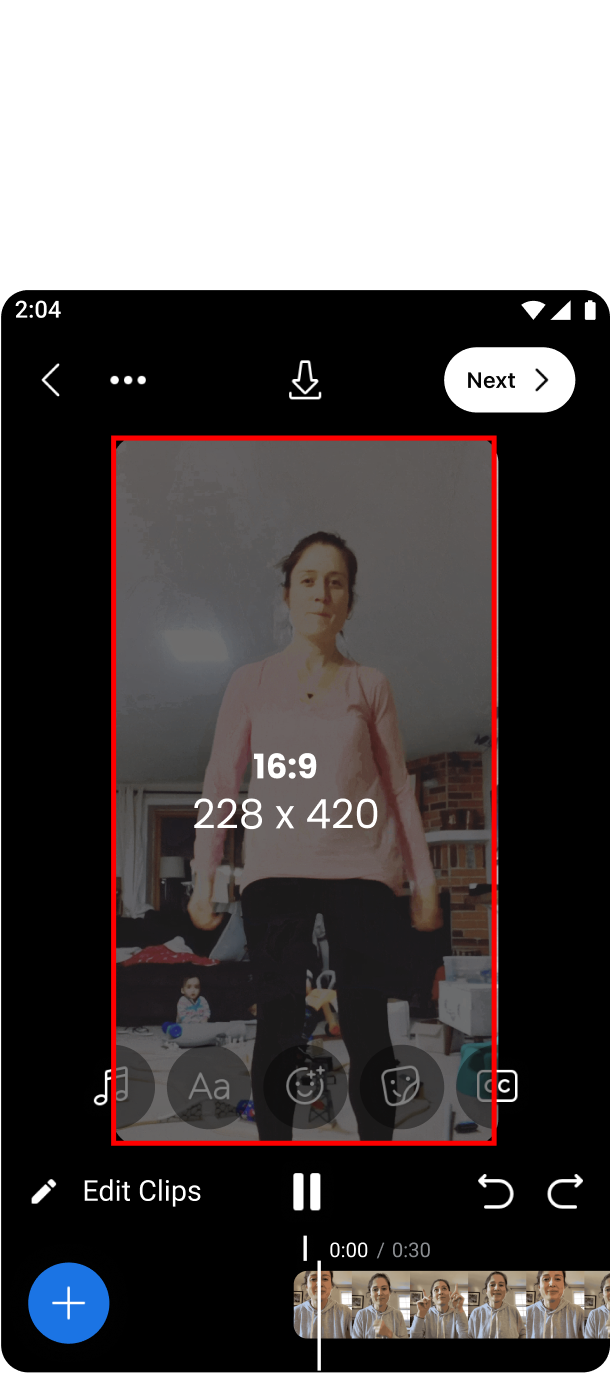
Android Small: 640 x 360
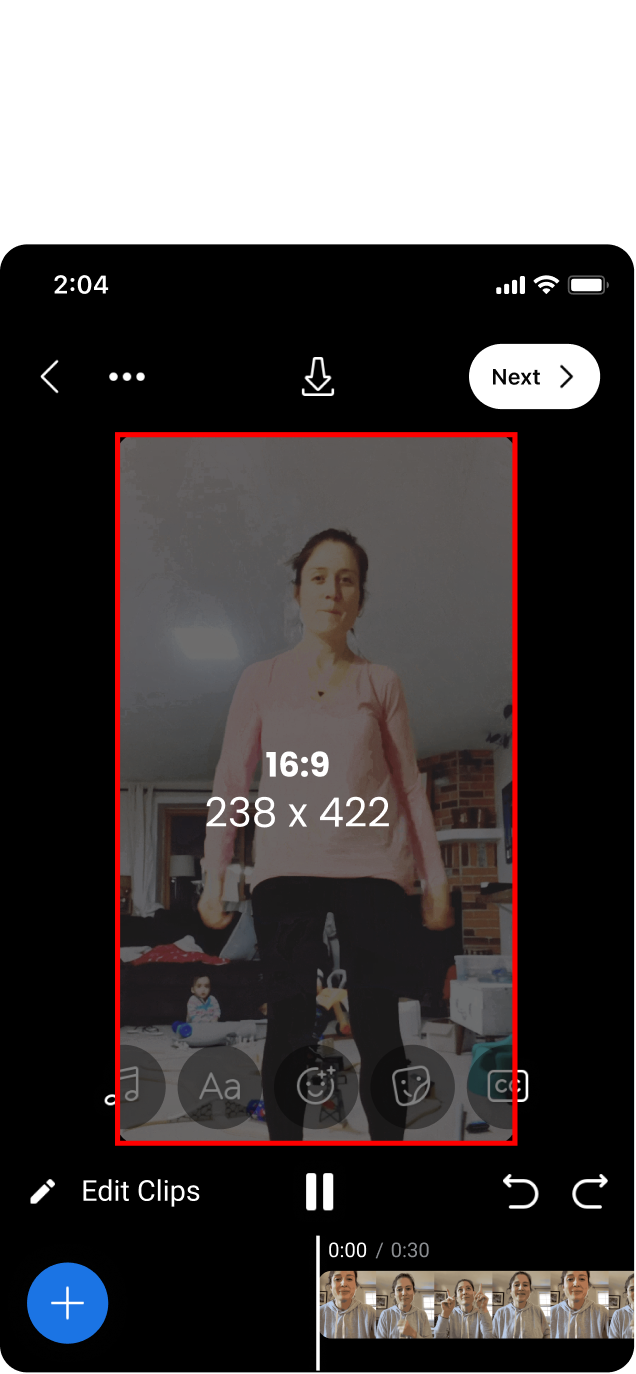
iPhone 8: 568.88 x 320
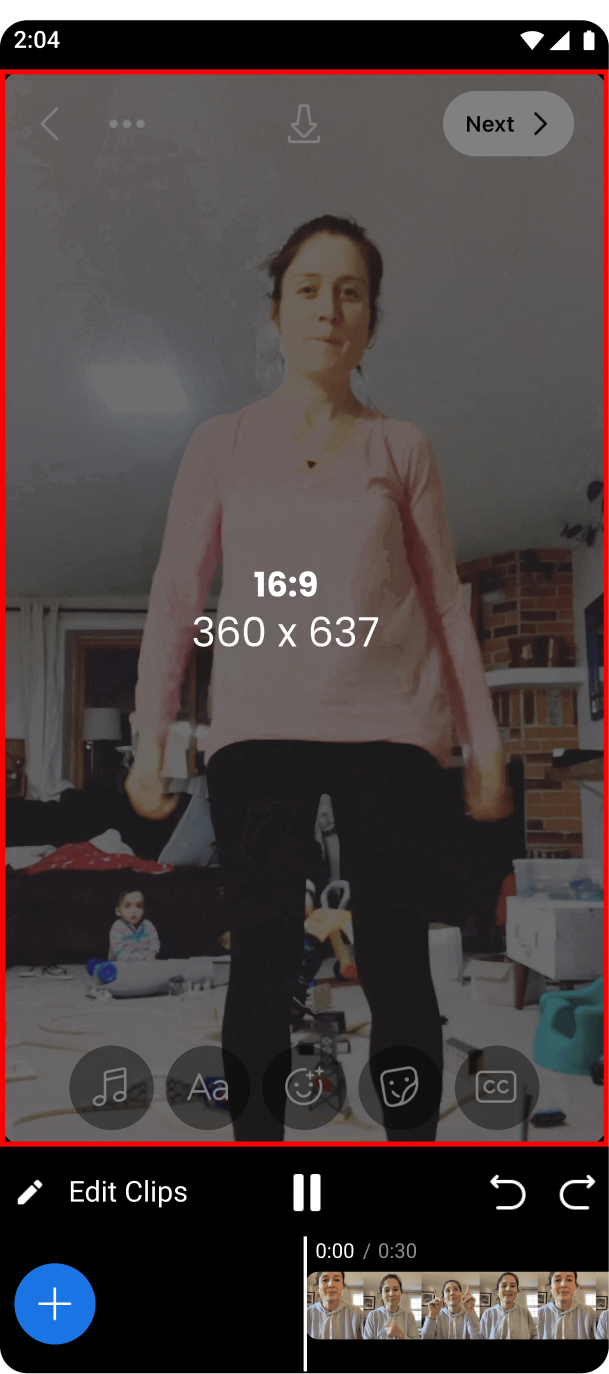
Android Large: 360 x 800
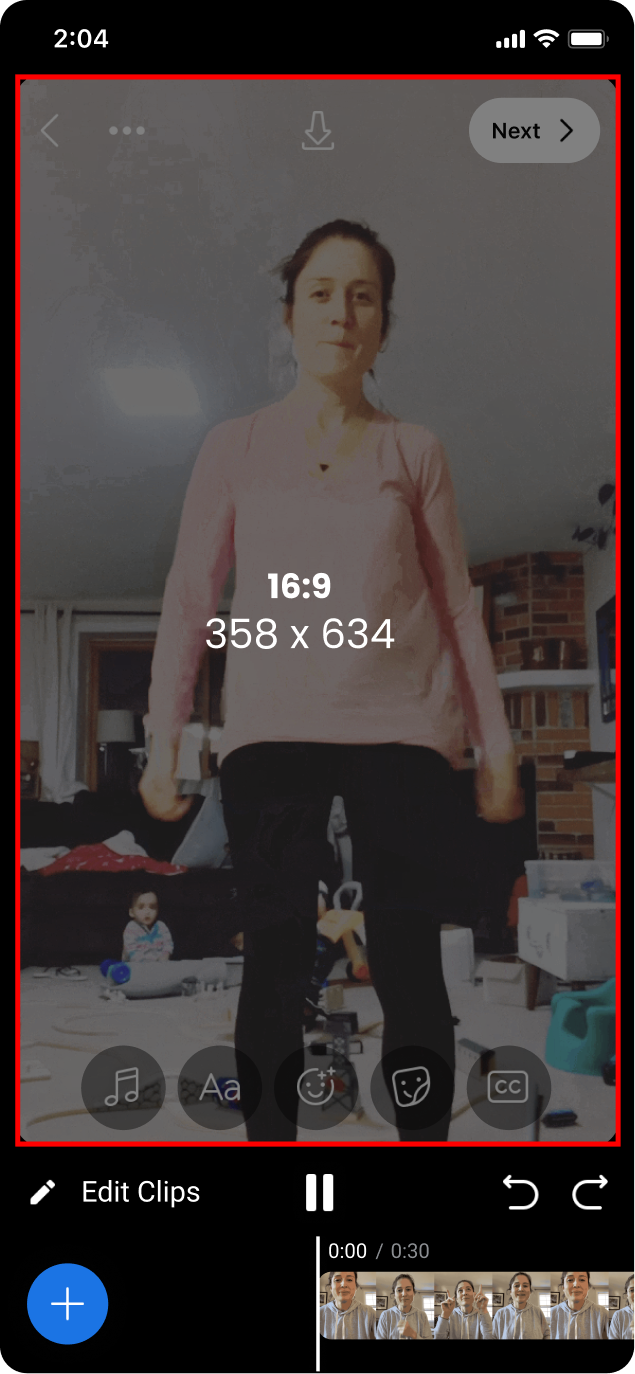
iPhone X: 375 x 812
Impact & Outcomes
The Reels Timeline Editor changed the trajectory of how Reels content is created at Meta. After stabilization: creators using multiple effects increased by +10%, average edit time dropped by 4 seconds — a compound saving of millions of hours at scale. The framework was adopted by 4+ teams across Audio, Visual Effects, Stickers, and Text, and the system remains the foundation for all Reels editing today.
Learnings
This project reinforced that the highest-impact design work often happens before a single wireframe is drawn — in the research, the strategic framing, and the stakeholder conversations that determine what gets built at all. Designing a system rather than a feature meant every decision had downstream consequences, which sharpened my thinking around scalability, consistency, and long-term maintainability.